
Back to insights
Case study | 15 October 2026

Amazon Web Services | Electricity cost recovery from data centres

Read our case study on how we analysed the impact of new data centre connections and electricity demand in Australia and New Zealand.

What was the challenge?

With the rapid growth of data centres comes the increasing demand for electricity and pressure on existing electricity networks. In Australia and New Zealand in particular, one of the key questions is whether this additional demand could increase electricity costs for other customers, particularly households.

To analyse this, we were commissioned by Amazon Web Services to examine the impact of new data centre connections and electricity demand in Australia and New Zealand.

Below we explore this work in the Australian National Electricity Market (NEM) context.

We looked at the two largest parts of a typical power bill: network charges, which pay for the poles and wires that carry electricity to homes and businesses, and wholesale electricity costs, which reflect the price retailers pay for the electricity they supply.

Our economic analysis focused on whether data centres pay for the extra costs they create, or whether these costs pass on to other customers through their power bills.

Data centres pay for the network and electricity supply costs they create
Data centres also help fund new renewable generation and storage
Network connection and pricing arrangements are designed to be cost-reflective for large new loads, and extra demand need not raise wholesale prices.

How did we complete the economic modelling and analysis?

We assessed how the NEM’s existing regulatory and market arrangements allocate the costs created by large new loads such as data centres.

For distribution networks, the local poles and wires that deliver electricity to homes and businesses, we examined the Australian Energy Regulator’s (AER) rules on upfront connection payments. Under these rules, the network compares the extra cost of connecting a new large customer, such as a data centre, with the network charges it expects that customer to pay in future. Where the cost is higher, the network can require the customer to pay the difference upfront.

That payment covers the cost of the new connection equipment and any upgrades needed to the wider network, less the network charges the customer is expected to pay.

For transmission networks, the high-voltage lines that carry electricity long distances from generators, we assessed the NEM’s “causer pays” pricing rules, under which the customer that causes the cost pays for it. This included how the rules charge for equipment built only to serve one customer, and how they share the cost of the wider network. The analysis considered how a data centre’s peak electricity use and its location determine its share of network costs.

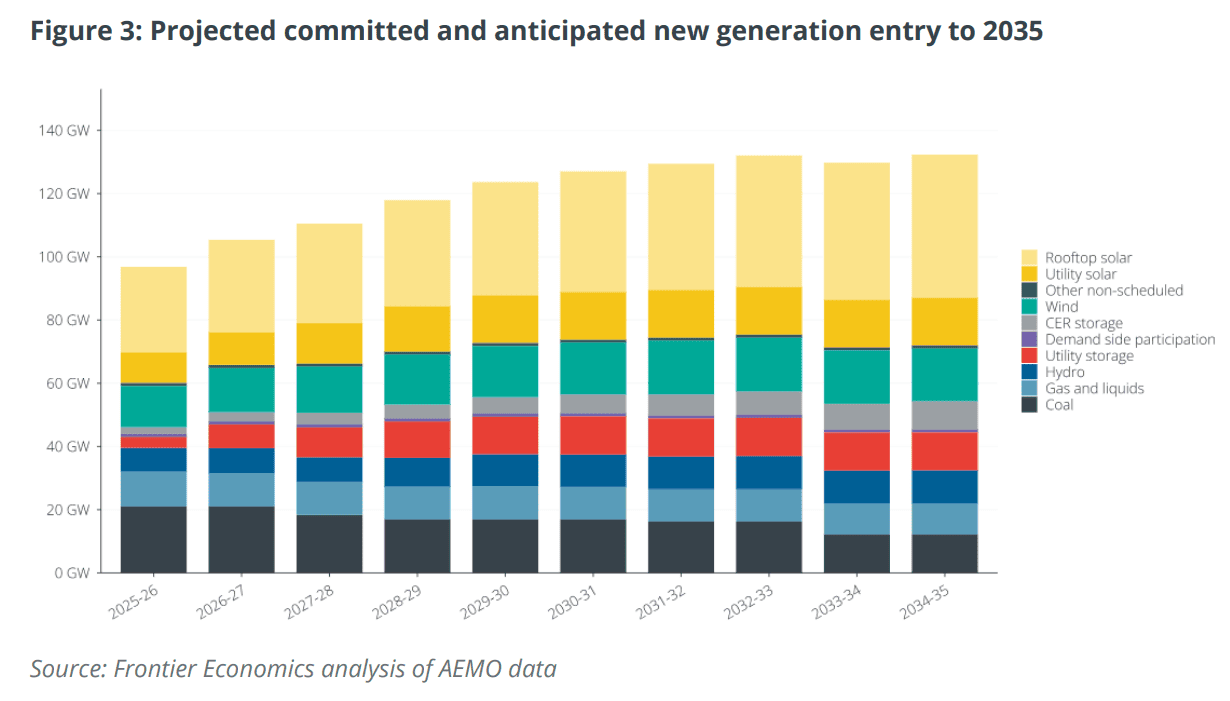
For wholesale electricity costs, we assessed how additional data centre demand affects the gap between the electricity available to the market and the electricity customers use. Available supply includes back-up sources that can run when wind and solar output is low. We then analysed data from the AER and the Australian Energy Market Operator (AEMO) on past and expected investment in generation and storage, along with AEMO projections of renewable generation and of renewable output that goes unused (figure 3 from the report, to the left).

We also considered how long-term supply contracts between data centres and generators help fund new renewable projects, so that new supply grows alongside data centre demand.

What were the results?

Our analysis found that the market and regulatory frameworks require data centres to pay for the network and electricity supply costs they create.

On local distribution networks, upfront connection payments limit how much of the cost of connecting data centres and upgrading the network passes to households and small businesses. On the transmission network, data centres pay the full cost of equipment built only to connect them, and a larger share of wider network charges because they use more of the network’s capacity. Together, these arrangements substantially limit how much of the network costs caused by data centres ends up on household bills.

For wholesale electricity costs, the economic analysis found that higher data centre demand does not automatically increase prices over the long term. When new generation, storage and back-up supply are built alongside new demand, supply keeps pace with demand and average wholesale prices should remain stable over time.

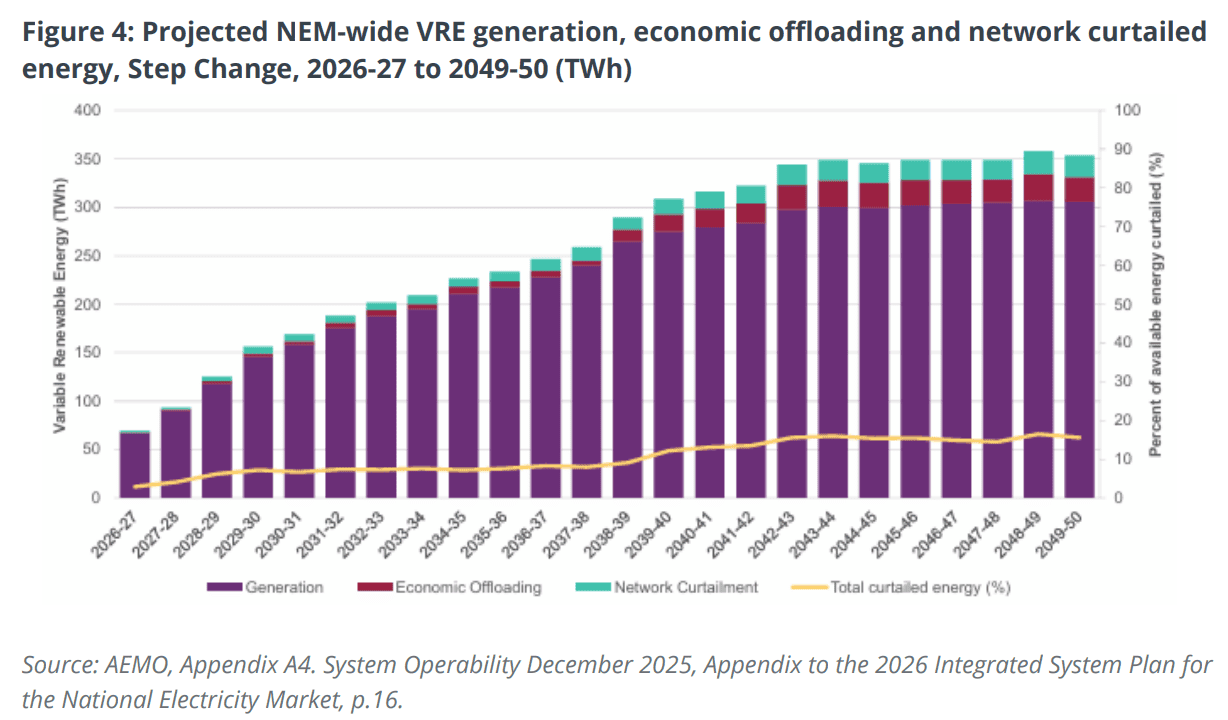
Figure 4 from the report, to the right, shows that the scale of surplus energy from renewable energy is expected to increase over time. In this context, the analysis also found that data centres and their customers can support new renewable and storage investment through long-term contracts, and provide confidence to renewable developers that a greater share of their output can be sold rather than being unused by the system.

DOWNLOAD THE REPORT

Related reading

All insights

Assessment of Coalition gas policy proposals

This report summarises the Coalition's suite of gas supply and pricing proposals and provides an independent assessment of the immediate effects on any new gas...

What can we help you with?

Ask us

Get our latest insights

Sign up