
Case study | 2 May 2025

Austroads | Opportunities to Increase Freight and Supply Chain Resilience

What was the challenge?

In Australia and New Zealand, maintaining road connections to communities in rural and/or remote areas is vital, as often there is a lack of alternative connections. Lifelines are freight routes that have high value to the communities and regions they support, but often do not deliver positive outcomes in conventional cost-benefit analysis assessments due to relatively low traffic levels.

For lifeline routes, impacts can be difficult to both measure and value, and because of this, they may have been historically underfunded. This is even more pertinent given road managers are increasingly encountering problems managing climate change impacts and natural hazard events on lifeline routes.

In light of this, Austroads, the association of Australasian Road Transport and Traffic Agencies, engaged Frontier Economics, in partnership with Edge Impact, to update their Lifeline Risk Indicator Tool. The tool was first released in 2016.

Lifeline route identification
Risk change ranking
Non-CBA investment ranking

How did we complete the economic modelling and analysis?

The process undertaken to scope the update to the Lifeline Risk Indicator Tool included:

  • An evidence review – taking stock of Austroad’s 2016 Lifeline Risk Indicator Tool and other relevant literature and data. This included understanding legislation around lifeline utilities legislation in New Zealand and other modelling tools relevant to freight resilience – including CSIRO TraNSIT model.
  • Road manager and policymakers’ consultation – meeting with local government, state and territories and national road managers and policy makers to better understand potential use cases and scope for an updated lifeline tool.
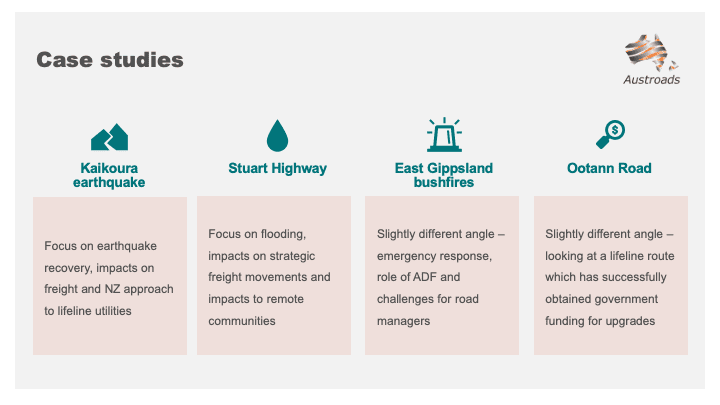
  • Case studies – developing four examples of impacts on freight networks, to ground the tool update in real-world events. These were the: Kaikoura earthquake, Stuart Highway flooding, East Gippsland bushfires and Ootann Road upgrades.
  • Risk analysis – providing an analysis of the extent to which key risks impacting freight transport networks are expected to change over time. These risks included extreme weather events, the changing climate, pandemics, seismic activity, cyber-threats and electricity disruptions.

On the basis of this initial work, options to update the Lifeline Risk Indicator Tool were explored. It was decided that the update tool should produce three key outputs:

  1. Lifeline route identification which ranks routes based on their characteristics. This allows road managers to establish a lifeline route network.
  2. Risk change ranking freight routes based on the change in risk score following an investment. This allows a road manager to identify the routes where risks can be effectively reduced.
  3. Non-CBA investment ranking freight routes where an alternative approach to justifying investment is taken. This ranking is based on a high-level assessment of the economic and social contribution of the routes.

What were the results?

The process and outcomes of the updated Lifeline Indicator Tool are documented in the Austroads report below titled “Opportunities to Increase Freight and Supply Chain Resilience”.

The tool was then developed to be available online. The digital version of the tool can be used to both identify a lifeline route network and assist with prioritising investments.

The updated Lifeline Risk Indicator Tool includes two assessment modules:

  • Assessment module 1 – Lifeline route identification
  • Assessment module 2 – Risk assessment and response analysis.

To learn more, you can watch the Austroads webinar below featuring the project team, discussing the project scope and outcomes, and how to use the tool.

DOWNLOAD FULL REPORT

AUSTROADS LIFELINE RISK INDICATOR TOOL

Related reading

All insights

What can we help you with?

Ask us

Get our latest insights

Sign up